
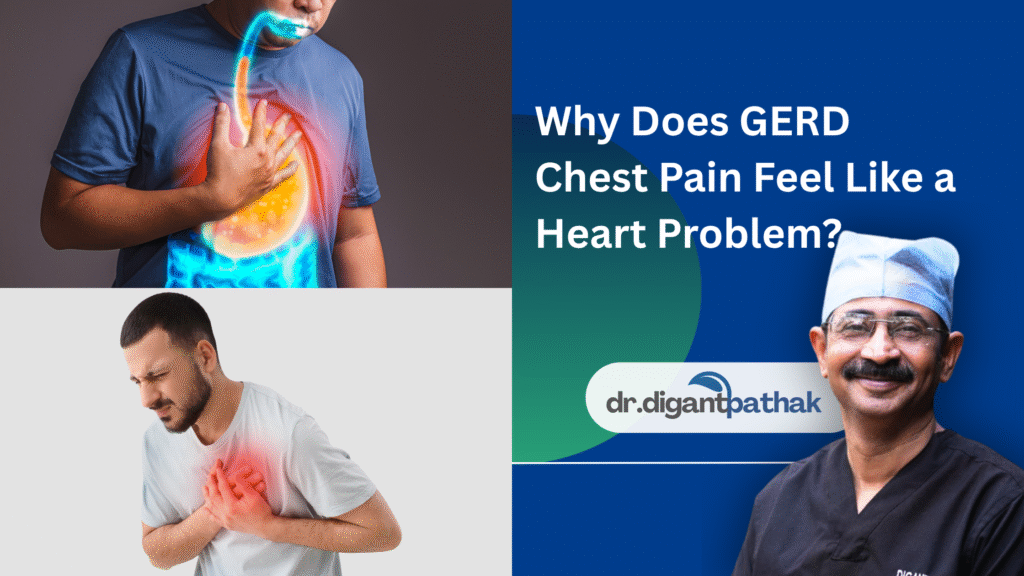
Chest pain is one of the most frightening symptoms a person can experience. For many people, the first thought is, “Am I having a heart attack?”
Interestingly, not every episode of chest pain comes from the heart. In many cases, the cause is GERD (Gastroesophageal Reflux Disease)—a condition in which stomach acid repeatedly flows back into the food pipe (esophagus).
Because the food pipe lies very close to the heart and shares similar nerve pathways, GERD can produce chest pain that closely resembles heart-related pain. Understanding the difference is important, but it is equally important to remember that any new, severe, or unexplained chest pain should always be treated as a medical emergency until a heart problem has been ruled out.
What Is GERD?
GERD (Gastroesophageal Reflux Disease) is a long-term condition where stomach acid repeatedly flows back into the esophagus.
Normally, a muscular valve called the Lower Esophageal Sphincter (LES) prevents stomach contents from moving upward. When this valve becomes weak or relaxes inappropriately, acid travels back into the esophagus, causing irritation and inflammation.
Over time, untreated GERD can affect quality of life and may lead to complications.
Why Does GERD Cause Chest Pain?
The esophagus runs through the chest, very close to the heart.
When acid repeatedly irritates the lining of the esophagus, it can produce pain that is often described as:
- Burning behind the breastbone
- Tightness in the chest
- Pressure or squeezing sensation
- Pain after meals
- Pain while lying down
- Pain that sometimes improves after antacids
Because these symptoms overlap with cardiac symptoms, many patients find it difficult to distinguish between the two.
GERD Chest Pain vs Heart Attack: What Is the Difference?
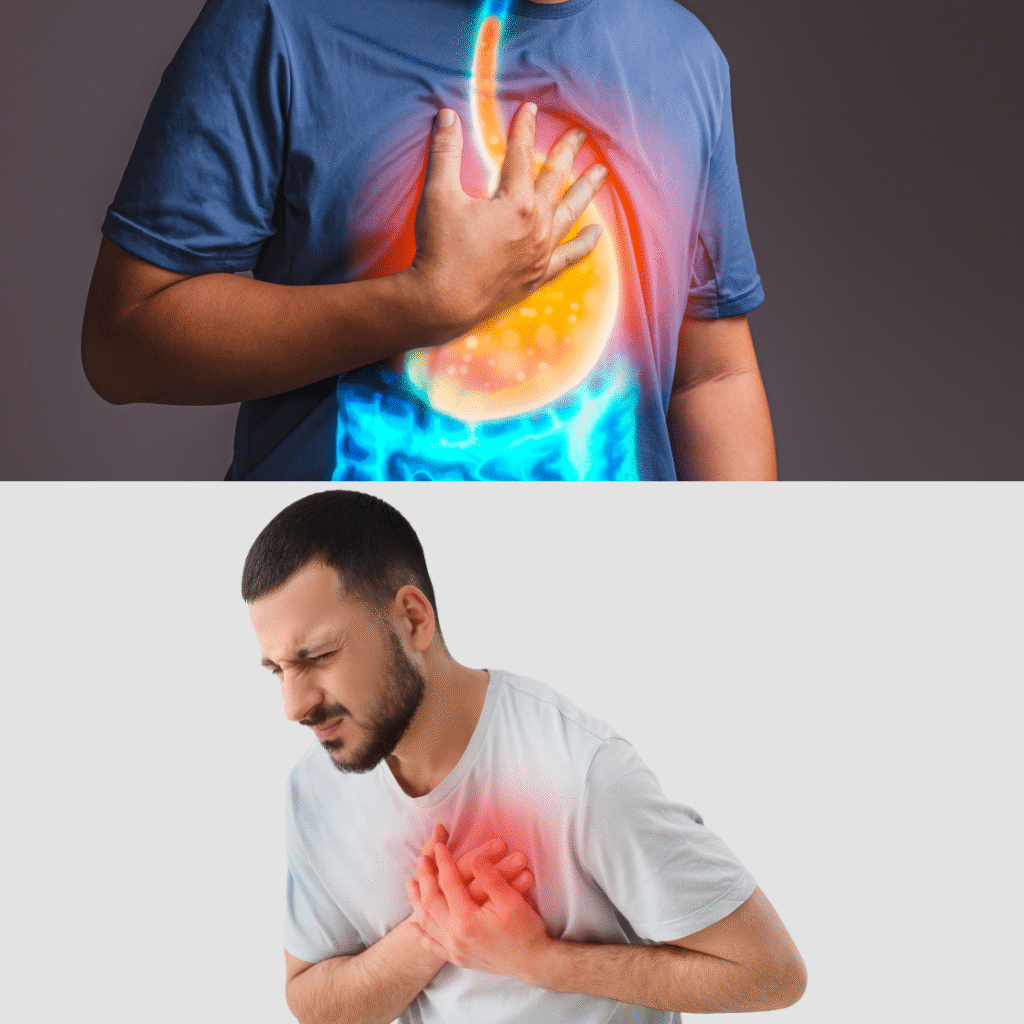
Although the symptoms may overlap, there are some important differences.
GERD pain is more likely to:
- Start after eating a heavy or spicy meal
- Worsen when lying flat or bending forward
- Be associated with acidity, sour taste, or food coming back into the mouth
- Improve after taking acid-suppressing medication or antacids
Heart-related chest pain is more likely to:
- Occur during physical activity or emotional stress
- Spread to the left arm, shoulder, neck, jaw, or back
- Be associated with sweating, dizziness, breathlessness, or nausea
- Not improve with antacids
Important: These differences are not enough to diagnose yourself. Some heart attacks can present unusually, and some GERD episodes can be extremely painful.
When Should You Go to the Emergency Department?
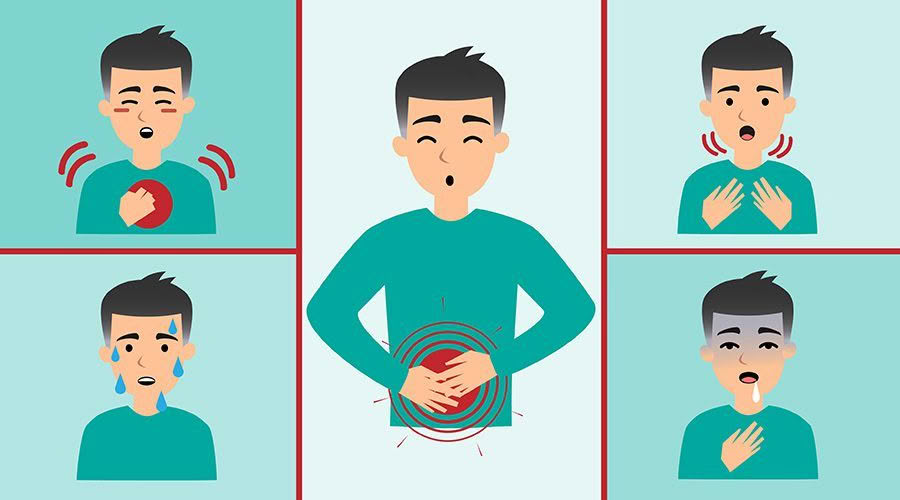
Seek immediate medical attention if your chest pain:
- Starts suddenly and is severe
- Lasts for several minutes without improvement
- Spreads to the arm, jaw, neck, or back
- Is accompanied by sweating, breathlessness, fainting, or vomiting
- Occurs in someone with diabetes, high blood pressure, or known heart disease
It is always safer to rule out a heart attack first.
When Could It Be GERD?
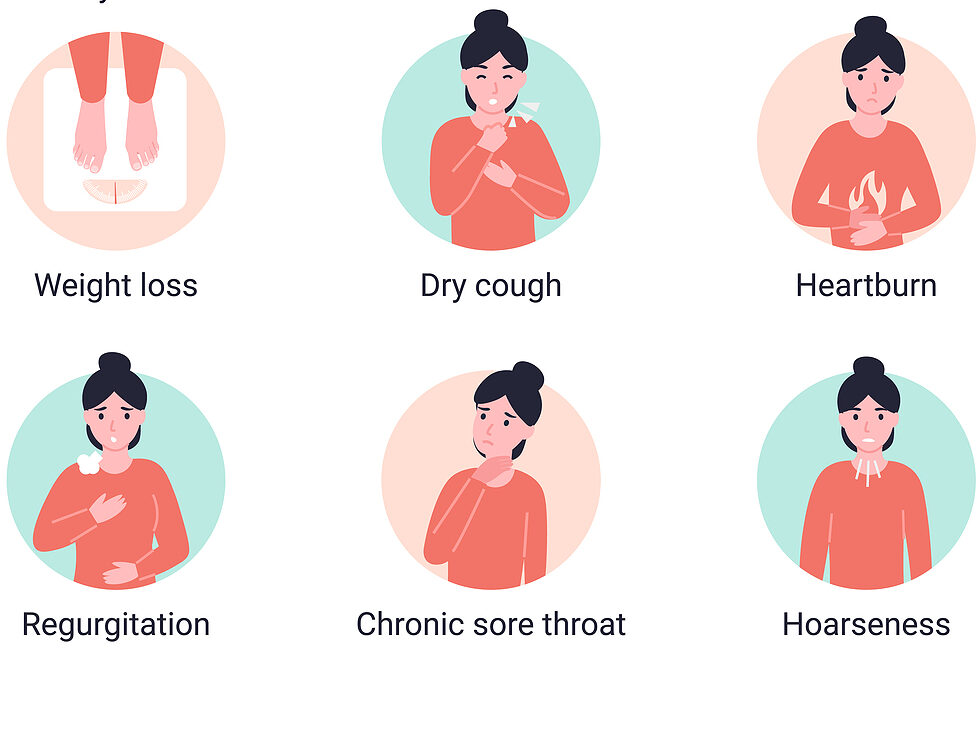
Once heart-related causes have been excluded, recurring symptoms such as:
- Frequent acidity
- Burning sensation in the chest
- Sour or bitter taste in the mouth
- Regurgitation of food
- Chronic cough
- Hoarseness of voice
- Symptoms that worsen at night
may indicate GERD and should be evaluated by a gastrointestinal surgeon.
Can GERD Be Treated Permanently?
Many patients achieve good symptom control with lifestyle modifications and medications.
However, if symptoms are severe, keep returning despite medicines, or require long-term medication to stay controlled, surgery may be a better long-term option for selected patients.
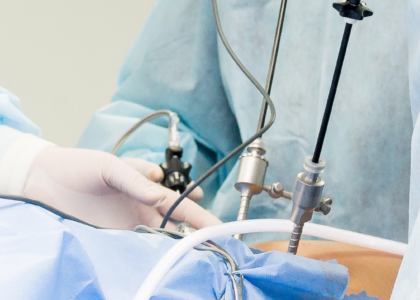
One of the most effective surgical treatments is laparoscopic anti-reflux surgery (laparoscopic fundoplication). Through small keyhole incisions, the procedure strengthens the valve between the stomach and esophagus, helping prevent acid reflux.
Compared with traditional open surgery, laparoscopic surgery generally offers:
- Smaller incisions
- Less post-operative pain
- Faster recovery
- Earlier return to daily activities
- Shorter hospital stay
Not every patient with GERD requires surgery, but for carefully selected patients, it can provide durable relief and reduce dependence on long-term medication.
When Should You Consult a Doctor?
You should consult a specialist if:
- You have acidity more than twice a week.
- Chest burning keeps coming back.
- Medicines provide only temporary relief.
- Symptoms disturb your sleep.
- You have difficulty swallowing.
- You have been taking acidity medicines for months without proper evaluation.
Early diagnosis helps identify the underlying cause and allows treatment before complications develop.
GERD Treatment in Jabalpur
If you experience persistent acidity, recurrent chest burning, or are unsure whether your symptoms are due to GERD, professional evaluation is essential.
Dr. Digant Pathak is an Advanced Hernia & Gall Bladder Surgeon with 20+ years of surgical experience and 16,000+ successful surgeries. He has extensive experience in the diagnosis and surgical management of GERD, hiatal hernia, colorectal diseases, appendicitis, gallbladder disorders, and other laparoscopic gastrointestinal procedures.
Consultations are available at:
Care Multi Speciality Hospital
Ukhari Chowk, MR-4 Road, Jabalpur
If you are living with long-standing GERD, Dr. Digant Pathak can evaluate whether lifestyle changes, medication, or advanced laparoscopic anti-reflux surgery is the most appropriate treatment for your condition.
Frequently Asked Questions
Can GERD really cause severe chest pain?
Yes. Acid reflux can irritate the esophagus enough to cause chest pain that closely resembles heart pain.
Can I tell the difference between GERD and a heart attack myself?
No. Chest pain should always be evaluated by a doctor to rule out a heart attack before assuming it is GERD.
Does every GERD patient need surgery?
No. Many patients improve with lifestyle changes and medication. Surgery is recommended only in selected cases after proper evaluation.
Is laparoscopic surgery safe for GERD?
In experienced hands, laparoscopic anti-reflux surgery is a well-established procedure that offers smaller incisions, faster recovery, and excellent long-term outcomes for appropriately selected patients.
Can untreated GERD become serious?
Yes. Persistent GERD may lead to inflammation, ulcers, narrowing of the esophagus, and conditions such as Barrett’s esophagus, which require medical follow-up.