


If you have been experiencing severe abdominal pain, nausea, or vomiting, your doctor may recommend two blood tests: serum lipase and serum amylase. These tests help identify problems involving the pancreas, particularly acute pancreatitis, a condition in which the pancreas becomes inflamed.
But what exactly do these enzymes indicate? Can elevated levels confirm pancreatitis? And when might surgery be necessary?
Understanding your test results can help you recognise warning signs, understand your diagnosis, and make informed decisions about treatment.
What Is the Lipase Test?

Lipase is an enzyme that helps break down dietary fats so the body can absorb them. Although it is produced mainly by the pancreas, smaller amounts may come from other tissues.
When the pancreas becomes inflamed or injured, lipase can enter the bloodstream in increased amounts.
A doctor may recommend a serum lipase test if you experience symptoms such as:
- Severe pain in the upper abdomen, sometimes radiating to the back
- Abdominal pain accompanied by nausea or vomiting
- Persistent pain after eating
- Unexplained abdominal discomfort when pancreatitis is suspected
Lipase levels typically begin rising within several hours of the onset of acute pancreatitis and may remain elevated for several days.
Why is lipase often preferred? It is generally more specific to pancreatic injury than amylase and can be useful when a patient seeks medical attention after symptoms have already been present for some time.
However, elevated lipase does not automatically mean pancreatitis. Kidney problems, certain intestinal conditions, and other illnesses can also increase its levels.
What Is the Amylase Test?

Amylase is an enzyme that breaks down starches and other complex carbohydrates into smaller sugars. It is produced mainly by the pancreas and salivary glands.
When pancreatic cells are inflamed or damaged, amylase can enter the bloodstream, causing its measured level to rise.
The test may be used when a doctor suspects acute pancreatitis or needs additional information about a possible pancreatic or abdominal condition.
Amylase levels usually rise within hours of acute pancreatitis and may return to normal within approximately three to five days.
This shorter period of elevation is one reason why a normal amylase result does not necessarily rule out pancreatitis, particularly if testing occurs later in the illness.
Amylase can also be elevated in conditions unrelated to the pancreas, so the result should never be interpreted in isolation.
Lipase vs Amylase: What Is the Difference?
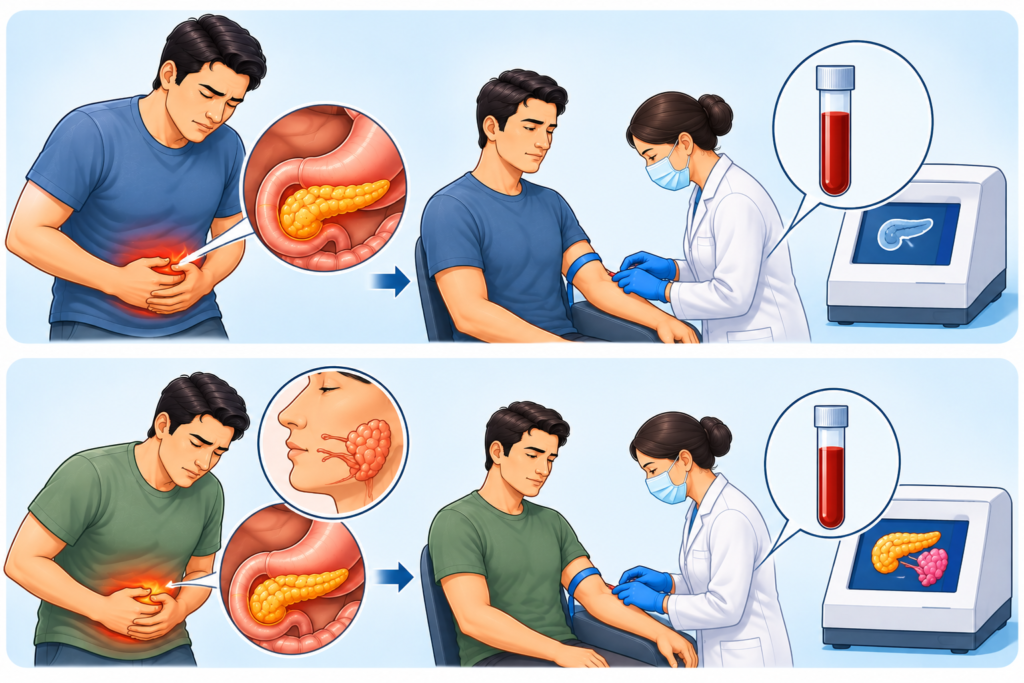
Although both tests help evaluate pancreatic conditions, they differ in their usefulness.
| Feature | Lipase Test | Amylase Test |
|---|---|---|
| Main function | Breaks down fats | Breaks down carbohydrates |
| Main source | Pancreas | Pancreas and salivary glands |
| Use in acute pancreatitis | Generally preferred | Can provide supporting information |
| Specificity for pancreatic injury | Generally higher | Lower |
| Duration of elevation | Often several days to one or two weeks | Usually around three to five days |
| Other causes of elevation | Kidney and intestinal disorders, among others | Salivary gland disorders and various abdominal conditions |
The duration of elevation varies between individuals and depends on the underlying condition.
In most suspected cases of acute pancreatitis, lipase is the preferred initial enzyme test, and measuring both enzymes routinely may not provide additional diagnostic value.
What Do High Lipase and Amylase Levels Mean?

Elevated pancreatic enzyme levels can occur for several reasons. The degree of elevation, the symptoms, and the clinical context all matter.
1. Acute Pancreatitis
Acute pancreatitis is a sudden inflammation of the pancreas. Common causes include gallstones and heavy alcohol use, although medications, high triglyceride levels, and other conditions can also be responsible.
Doctors commonly diagnose acute pancreatitis when at least two of the following three criteria are met:
- Characteristic abdominal pain
- Lipase or amylase levels at least three times the upper limit of normal
- Imaging findings consistent with acute pancreatitis
A high lipase level supports the diagnosis, but the number alone does not determine how severe the disease is.
2. Gallstones Blocking the Pancreatic Drainage Pathway
Gallstones can sometimes move from the gallbladder into the bile duct and obstruct the area where bile and pancreatic secretions drain into the intestine.
This obstruction can trigger acute pancreatitis, known as gallstone pancreatitis.
Depending on the findings, treatment may involve supportive medical care, endoscopic removal of a bile duct stone, and gallbladder removal to reduce the risk of another episode.
3. Other Medical Conditions
Elevated lipase or amylase levels may also occur in kidney dysfunction, certain intestinal conditions, and other illnesses.
Therefore, your doctor may recommend additional blood tests, an abdominal ultrasound, a CT scan, or an MRI-based investigation depending on your symptoms and initial findings.
What If Lipase and Amylase Levels Are Normal?
Normal enzyme levels do not always exclude pancreatic disease.
For example, testing very early in the illness, testing after enzyme levels have declined, or certain forms of pancreatitis may produce results that do not fit the typical pattern.
If symptoms strongly suggest pancreatitis, your doctor may recommend further evaluation even when the initial blood tests are normal.
Do not ignore severe or persistent abdominal pain simply because your enzyme levels are within the reference range.
How Is Pancreatitis Treated? Is Surgery Always Necessary?
Treatment depends on the cause and severity of pancreatitis. Many patients with acute pancreatitis are treated initially with hospital-based supportive care, including appropriate fluids, pain relief, nutritional support, and monitoring for complications.
Not every patient with pancreatitis requires surgery. In fact, surgery is not the routine first-line treatment for uncomplicated acute pancreatitis.
However, identifying and treating the underlying cause is essential to prevent recurrence and manage complications.
For gallstone pancreatitis, the treatment plan may include:
- Endoscopic treatment: ERCP may be required when a bile duct stone is causing persistent obstruction or when certain complications, such as cholangitis, are present.
- Laparoscopic cholecystectomy: Removal of the gallbladder using small incisions is generally recommended for suitable patients with mild gallstone pancreatitis, often during the same hospital admission.
- Specialised intervention: Severe pancreatitis with infected or symptomatic collections may require endoscopic, radiological, or surgical procedures, depending on the circumstances.
Why Does Laparoscopic Surgery Matter in Gallstone-Related Pancreatitis?
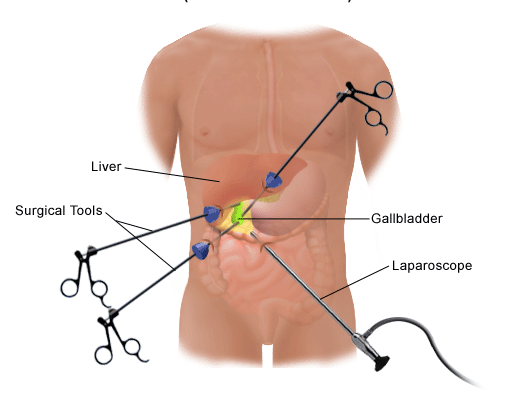
When gallstones are responsible for pancreatitis, removing the gallbladder can help prevent future gallstone-related episodes in appropriate patients.
Laparoscopic cholecystectomy is a minimally invasive procedure performed through small incisions using a camera and specialised instruments.
Compared with conventional open surgery, laparoscopic gallbladder removal generally offers several benefits for suitable patients:
- Smaller surgical incisions
- Less postoperative pain in many cases
- Shorter hospital stays
- Faster return to routine activities
The exact recovery time depends on the patient’s condition, the severity of pancreatitis, and whether other complications are present.
Patients with severe inflammation or significant complications may need their treatment stabilised before gallbladder surgery is performed.
The decision should always be based on a specialist’s assessment rather than the enzyme levels alone.
When Should You Consult a Doctor?
Seek medical evaluation if you experience persistent upper abdominal pain, repeated vomiting, or pain that radiates to your back.
Seek emergency medical care immediately if you have severe or worsening abdominal pain, persistent vomiting, fever with significant abdominal pain, fainting, confusion, or difficulty breathing.
Acute pancreatitis can sometimes become serious and requires prompt assessment.
Pancreatic and Gallstone Conditions: Consultation in Jabalpur
If your blood tests show elevated lipase or amylase levels, the next step is to determine the underlying cause rather than focusing on the numbers alone.
Dr. Digant Pathak, a laparoscopic and general surgeon at Care Multi Speciality Hospital, Jabalpur, provides surgical evaluation for conditions including gallstones and other abdominal surgical problems.
Patients with suspected pancreatitis or gallstone-related complications may need coordinated evaluation by a gastroenterologist, physician, and surgeon, depending on the diagnosis and severity.
Hospital: Care Multi Speciality Hospital
Location: Ukhari Chowk, MR-4 Road, Jabalpur
An appropriate evaluation helps determine whether medical management, endoscopic treatment, or laparoscopic surgery is the right option.
Frequently Asked Questions
Is lipase more accurate than amylase for pancreatitis?
Lipase is generally preferred because it is more specific to pancreatic injury and remains elevated longer. Neither test should be interpreted without considering symptoms and other clinical findings.
How high does lipase have to be to indicate pancreatitis?
A lipase level at least three times the laboratory’s upper limit of normal supports a diagnosis when the clinical picture is consistent. The diagnosis generally requires at least two of three accepted criteria: characteristic pain, enzyme elevation, or compatible imaging.
Can high lipase levels indicate something other than pancreatitis?
Yes. Kidney dysfunction, intestinal disorders, and several other conditions can elevate lipase. A high result does not establish the diagnosis by itself.
Can pancreatitis occur with normal amylase levels?
Yes. Amylase can return to normal within a few days, and some patients may not have a significant elevation. Lipase and other clinical findings may be more informative.
Does gallstone pancreatitis always require surgery?
Not every patient needs immediate surgery. However, suitable patients with mild gallstone pancreatitis are generally advised to undergo laparoscopic gallbladder removal to reduce recurrence. The timing depends on the severity of the illness and any complications.
Is laparoscopic gallbladder surgery possible after pancreatitis?
Yes. Laparoscopic gallbladder removal is commonly recommended after mild gallstone pancreatitis once the patient is suitable for surgery. Severe pancreatitis or significant local complications may require delaying the procedure until the inflammation and complications are appropriately managed.
Can I diagnose pancreatitis from a blood test alone?
No. Blood tests are important, but diagnosis depends on the complete clinical picture, including symptoms, examination findings, and imaging when indicated.