

One of the most common concerns patients have after hernia surgery is: “Doctor, surgery toh ho gayi, phir hernia dobara kaise ho gaya?”
Hernia recurrence means that a hernia develops again at or near the site that was previously repaired. While modern hernia surgery has good success rates, recurrence is still possible in some patients.
The important thing to understand is that recurrence does not always mean that the previous surgery was “unsuccessful.” Several factors can contribute to a hernia coming back, including the type of hernia, the size of the defect, tissue strength, surgical technique, postoperative recovery and certain patient-related factors.
What Causes a Hernia to Come Back After Surgery?
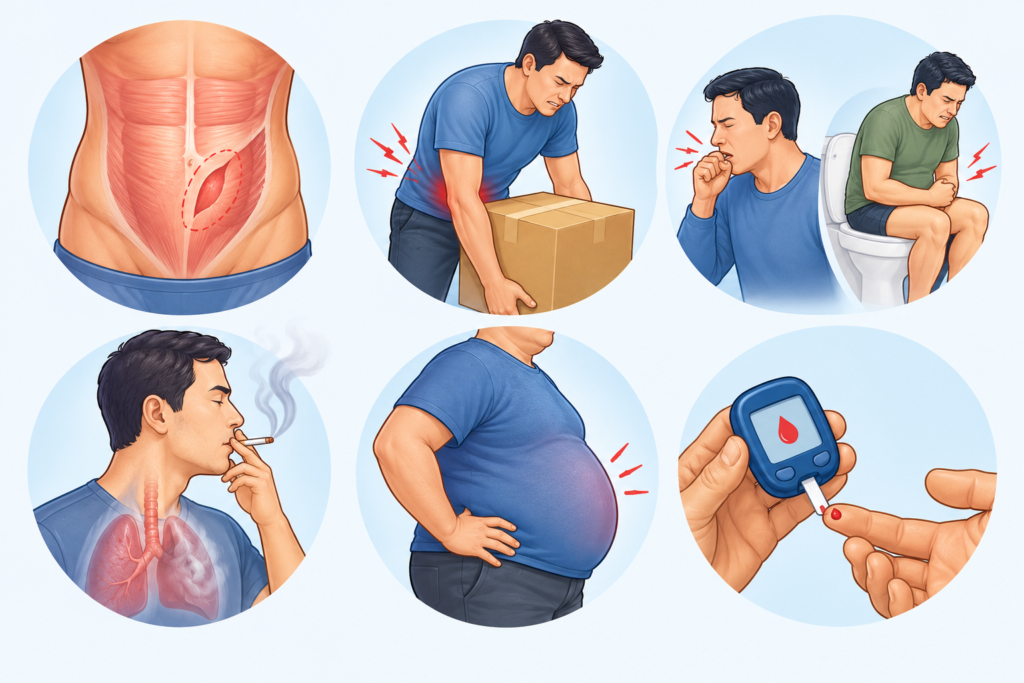
A hernia can recur when the repaired abdominal wall becomes weak again or when the original repair is subjected to factors that interfere with healing.
Some of the important reasons include:
- Weak abdominal wall or poor tissue quality
- Large or complicated hernias
- Infection at the surgical site
- Excessive strain during the recovery period
- Chronic cough or constipation
- Smoking
- Obesity or significant weight gain
- Poorly controlled diabetes
- Previous recurrent hernia
- Inadequate coverage or failure to address the underlying defect
However, recurrence is not caused by one factor alone in every patient. The nature of the hernia and the way it is repaired both matter.
Does the Surgical Technique Affect Hernia Recurrence?
Yes. The choice of surgical technique depends on the location, size, type and complexity of the hernia, as well as the patient’s individual condition.
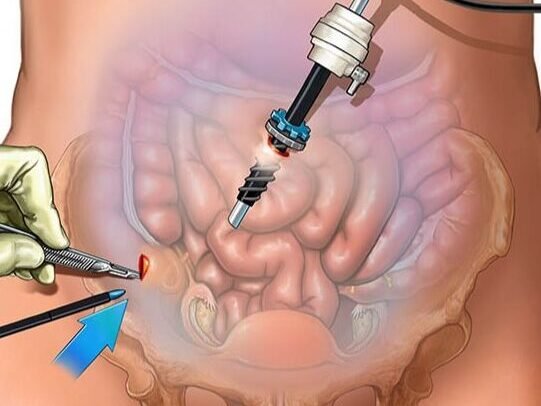
In appropriately selected patients, laparoscopic hernia repair can offer important advantages. Instead of making a large incision directly over the hernia, laparoscopic surgery uses small incisions and a camera to access and repair the defect.
A laparoscopic approach can allow the surgeon to visualize the abdominal wall from inside, identify the defect and place the mesh with adequate overlap where appropriate.
For certain types of hernias, particularly some recurrent or multiple defects, a laparoscopic approach may also allow the surgeon to address the repair without reopening the previous incision.
Why Is Mesh Used in Hernia Surgery?
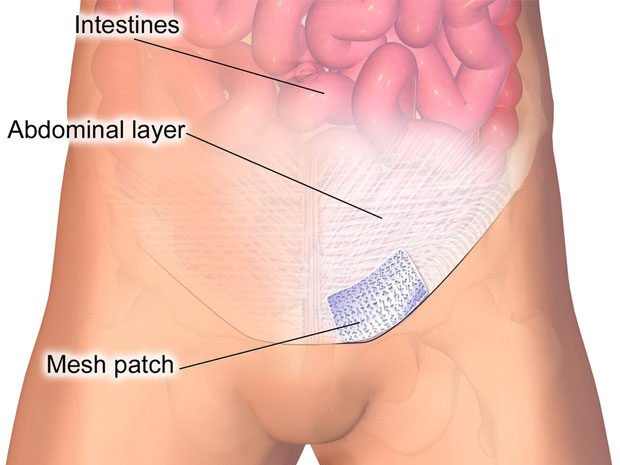
The abdominal wall needs adequate reinforcement after the hernia defect is repaired. In many hernia repairs, a surgical mesh is used to reinforce the weakened area.
Think of it as reinforcing a weak section of a wall rather than simply closing the opening and expecting the surrounding tissue to withstand the same pressure again.
But mesh alone does not guarantee that a hernia will never return.
Correct mesh selection, adequate coverage, appropriate positioning and proper fixation—combined with good surgical technique—are all important.
Can Laparoscopic Surgery Reduce the Risk of Recurrence?
Laparoscopic surgery is not a guarantee against recurrence, and it is not automatically the best approach for every hernia.
However, when laparoscopic repair is appropriate for the patient’s particular hernia, it provides several technical advantages. The surgeon can assess the abdominal wall internally, identify the defect and place reinforcement over the appropriate area through small incisions.
For some patients, this can also be particularly useful when dealing with a recurrent hernia after previous open surgery, because the surgeon may be able to approach the repair through a different anatomical plane.
The key is not simply choosing “laparoscopic” over “open.” The right technique has to be chosen for the right hernia and performed correctly.
Can Your Lifestyle Cause a Hernia to Come Back?
Yes, certain conditions can increase the pressure inside the abdomen or interfere with proper healing.
For example, persistent coughing, chronic constipation, smoking, obesity and premature heavy physical activity can place additional stress on the repaired abdominal wall.
This is why recovery instructions after surgery matter.
Patients should follow their surgeon’s advice regarding physical activity, wound care, diet, constipation management and when they can gradually return to exercise or heavy lifting.
How Can You Reduce the Risk of Hernia Recurrence?
There is no way to guarantee that a hernia will never recur, but several measures can help reduce the risk.
Maintain a healthy weight, avoid smoking, manage diabetes if present, treat persistent cough and constipation, and follow your surgeon’s instructions during recovery.
Most importantly, do not rush back into heavy lifting simply because the external wounds look healed. Internal tissues continue to strengthen during the healing process.
What If Hernia Has Already Come Back?
A recurrent hernia should be evaluated rather than simply watched indefinitely.
The surgeon may assess the previous operation, the location and size of the recurrent defect, the type of mesh used previously, your symptoms and your overall health. Imaging such as an ultrasound or CT scan may sometimes be recommended depending on the situation.
A recurrent hernia does not mean that you cannot be treated successfully. It means the repair needs careful planning.
In some recurrent cases, a laparoscopic approach can be particularly useful because the surgeon can approach the hernia from a different plane and avoid operating directly through the previous scar, depending on the patient’s anatomy and previous surgery.
When Should You See a Surgeon?
If you notice a new bulge, swelling, pulling sensation or pain around a previous hernia surgery site, it is worth getting it examined.
Seek urgent medical attention if the bulge becomes suddenly painful, hard, irreducible, or is accompanied by vomiting, abdominal distension or difficulty passing stool or gas. These can be signs of a complicated hernia.
Hernia Treatment in Jabalpur
For recurrent or complex hernias, choosing an experienced surgeon is important because the treatment is not simply about “doing the surgery again.” The previous repair, anatomy, mesh position and reason for recurrence all need to be considered before deciding on the next approach.
Dr. Digant Pathak, a laparoscopic and general surgeon in Jabalpur, specializes in laparoscopic surgical procedures, including hernia and gallbladder surgery. With 20+ years of surgical experience and 16,000+ surgeries, his approach focuses on selecting the appropriate surgical technique based on the patient’s individual condition.
At Care Multi Speciality Hospital, Ukhari Chowk, MR-4 Road, Jabalpur, patients can be evaluated for both primary and recurrent hernias and advised on the most appropriate treatment approach.
Frequently Asked Questions
Can a hernia come back even after mesh surgery?
Yes. Mesh significantly reinforces the repaired area, but recurrence can still occur because of factors such as tissue weakness, infection, excessive strain, obesity, smoking, chronic cough or technical and anatomical factors.
Is laparoscopic surgery better for recurrent hernia?
It can be advantageous in appropriately selected recurrent hernias, particularly when the previous repair was performed through an open approach. However, the best technique depends on the location, size, previous repair and complexity of the recurrent hernia.
Does a recurrent hernia always require another surgery?
Not necessarily. The decision depends on the type of recurrence, symptoms, size and risk of complications. A surgeon should evaluate the hernia before deciding whether another repair is required.
Can heavy lifting cause a hernia to come back?
Heavy or strenuous activity can place significant stress on the abdominal wall, particularly during the healing period. Patients should follow their surgeon’s specific advice about when and how to resume heavy activity.
Is laparoscopic hernia surgery completely recurrence-proof?
No surgical technique can guarantee zero recurrence. The goal is to select the right repair for the individual patient and perform it with appropriate technique, mesh placement and adequate defect coverage.
Can a recurrent hernia be repaired laparoscopically?
In many appropriately selected patients, yes. Laparoscopic repair may provide a useful alternative approach, particularly after a previous open repair, but the decision must be made after evaluating the previous surgery and current anatomy.