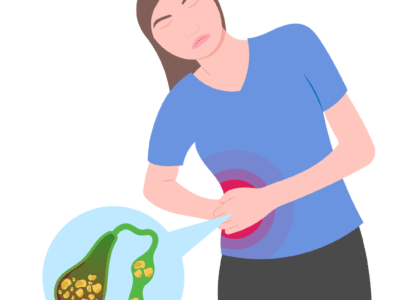

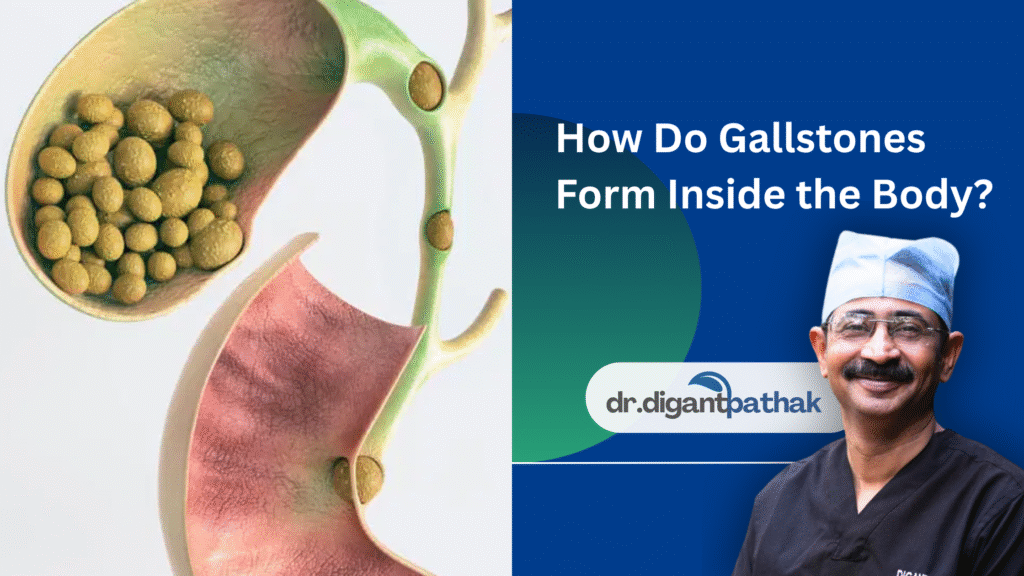
Gallstones are one of the most common reasons people experience repeated pain in the upper abdomen, especially after eating oily or heavy food. Many patients are surprised when they discover they have stones because the condition often develops slowly over time.
A common question people ask is:
“How do these stones even form inside the body?”
The answer becomes easier to understand once you know what the gallbladder actually does.
What Is the Gallbladder?
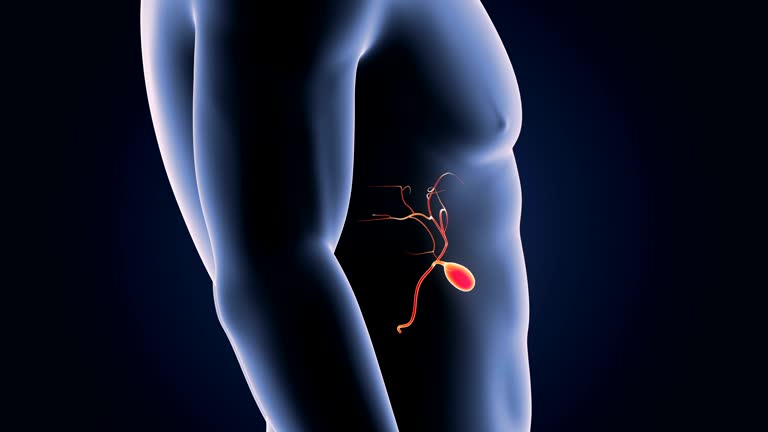
The gallbladder is a small pouch-like organ located below the liver.
Its job is to store bile, a digestive fluid produced by the liver. Bile helps the body digest fats and oily food.
Whenever you eat, especially fatty meals, the gallbladder contracts and releases bile into the intestine through a small tube called the bile duct.
So How Do Gallstones Actually Form?

Gallstones usually develop when the balance of substances inside bile gets disturbed.
This can happen in different ways:
Excess Cholesterol in Bile
One of the most common causes is excess cholesterol.
When bile contains more cholesterol than it can dissolve, the extra cholesterol starts forming tiny crystals. Over time, these crystals join together and gradually become stones.
Poor Emptying of the Gallbladder
Sometimes the gallbladder does not empty properly.
When bile remains stagnant inside for a long time, particles start settling down and sticking together, increasing the chances of stone formation.
Imbalance in Bile Chemicals
Bile contains different salts and pigments that help maintain balance.
If this balance changes, especially due to liver issues, infections, or metabolic conditions, stones may start developing.
What Do Gallstones Look Like?
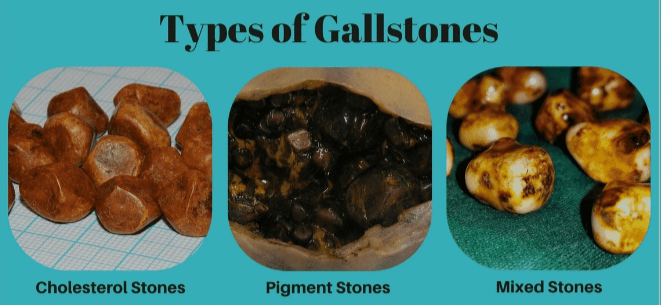
Gallstones can vary greatly in size.
Some are:
- As small as grains of sand
- Others may become as large as a golf ball
A person may have:
- One large stone
- Multiple small stones
- Hundreds of tiny stones
Why Do Some People Develop Gallstones?
Certain factors increase the risk:
- Eating high-fat or oily food regularly
- Obesity or sudden weight loss
- Diabetes
- Pregnancy
- Family history of gallstones
- Age above 40
- Sedentary lifestyle
However, gallstones can also occur in younger individuals.
Can Gallstones Go Away on Their Own?
Gallstones do not dissolve naturally.
Small stones may remain silent for some time, but once symptoms begin, medical evaluation becomes important.
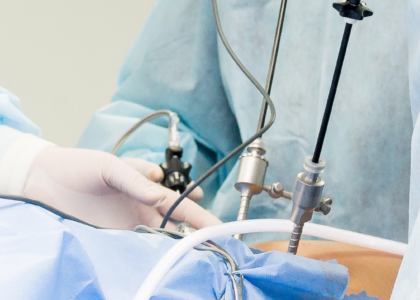
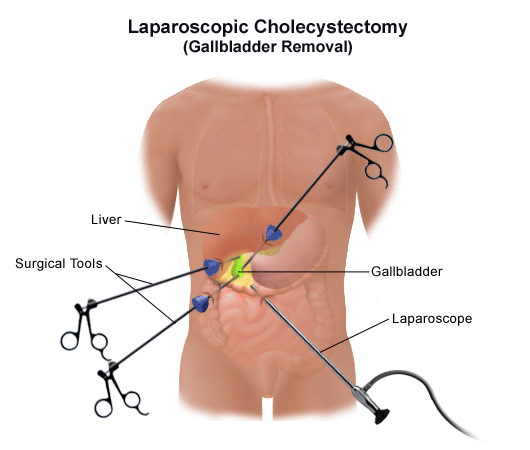
Ignoring repeated pain episodes can increase the risk of complications later. Gallstones can be treated permanently by removing the gallbladder through laparoscopic surgery
When Should You See a Doctor?
You should consult a doctor if you experience:
- Repeated pain after meals
- Sudden upper abdominal pain
- Pain radiating to the back or shoulder
- Vomiting with abdominal pain
- Fever or jaundice along with pain
Early diagnosis often allows treatment before complications develop.
Gallbladder Stone Treatment in Jabalpur
If you are experiencing symptoms of gallstones or repeated abdominal pain, consulting an experienced surgeon is important.
Dr. Digant Pathak
- 20+ years of surgical experience
- 16,000+ successful surgeries
- Advanced Hernia & Gallbladder Surgeon
- Expertise in laparoscopic surgery, GERD, appendicitis, and colorectal conditions
Consultation available at:
Care Multi Speciality Hospital
Ukhari Chowk, MR-4 Rd, Jabalpur
Early treatment can help prevent complications and provide faster recovery.
Frequently Asked Questions
Can gallstones dissolve with medicines?
Some medicines may help in selected cases, but most symptomatic gallstones eventually require treatment.
Can gallstones come back after surgery?
Once the gallbladder is removed, gallbladder stones do not return.
Is gallbladder surgery safe?
Yes. Laparoscopic gallbladder surgery is commonly performed and is considered safe when done by an experienced surgeon.
Can gallstones cause pancreatitis?
Yes. Stones blocking the bile duct can trigger pancreatitis.
Can young people get gallstones?
Yes. Gallstones are increasingly being seen in younger age groups as well.