
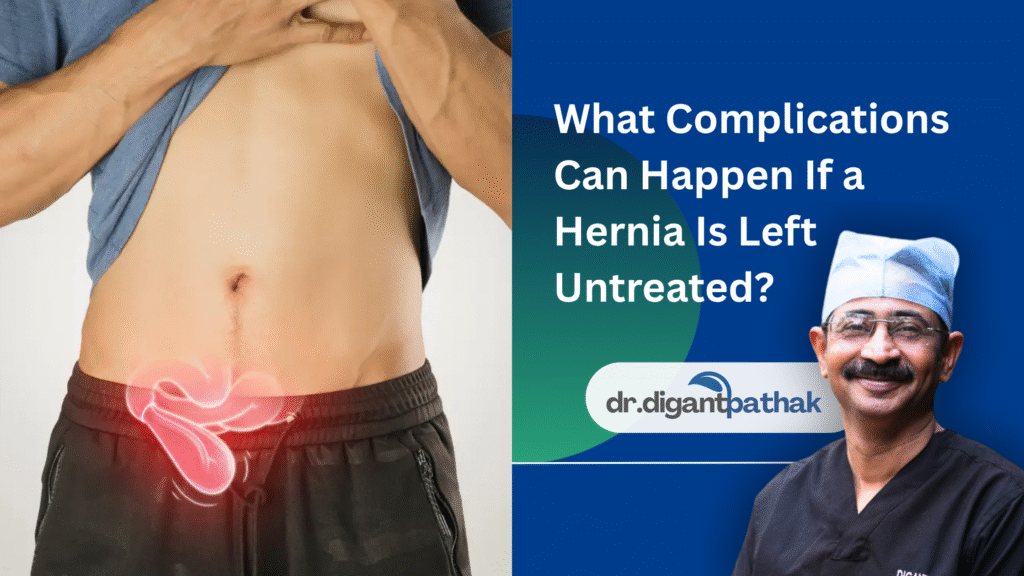
Many people discover a hernia and decide to wait.
The bulge is small, the pain is minimal, and daily life seems normal. Naturally, the thought is:
“Agar zyada dikkat nahi hai, toh abhi surgery ki kya zarurat hai?”
The problem is that a hernia is not like a muscle strain or swelling that heals on its own. Once a hernia develops, the weakness in the abdominal wall remains. In most cases, the hernia gradually enlarges over time and can lead to complications that are far more difficult to treat than an early-stage hernia.
Understanding these risks can help you make an informed decision before a simple problem becomes a serious one.
Why Doesn’t a Hernia Heal on Its Own?
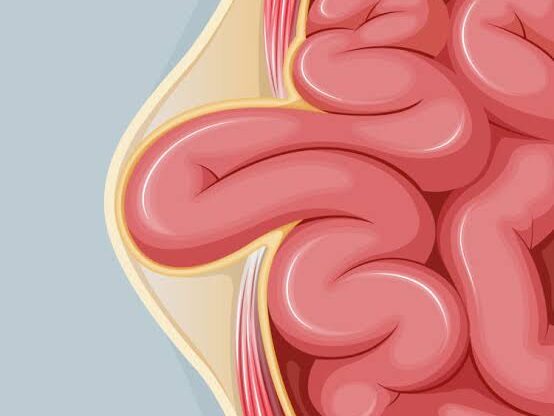
A hernia occurs when tissue or part of the intestine pushes through a weak area in the abdominal wall.
Unlike a cut or an infection, the weakness in the muscle does not repair itself naturally.
This means that:
- The opening usually remains present
- Pressure from coughing, lifting, constipation, or daily activities continues to act on it
- The bulge may gradually become larger
This is why doctors generally consider hernia a condition that progresses rather than disappears.
Complication #1: The Hernia Gets Bigger
This is the most common complication.
A small hernia that causes little inconvenience today may become significantly larger over months or years.
As the size increases:
- The bulge becomes more visible
- Discomfort becomes more frequent
- Physical activities become more difficult
- Surgery may become more technically challenging
Many patients wish they had treated their hernia earlier when the procedure was simpler and recovery easier.
Complication #2: Increasing Pain and Discomfort
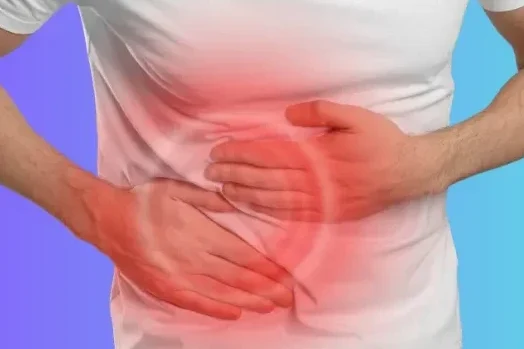
Not all hernias are painful initially.
However, as the hernia enlarges, patients often experience:
- A dragging sensation
- Heaviness in the abdomen or groin
- Pain during walking
- Discomfort while exercising
- Pain while coughing or lifting weights
What begins as an occasional annoyance can eventually affect work, travel, exercise, and daily activities.
Complication #3: Incarcerated Hernia
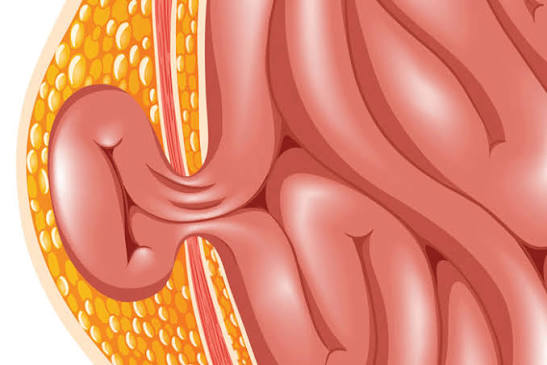
One of the more serious complications is called an incarcerated hernia.
This happens when the tissue or intestine that has protruded through the muscle wall becomes trapped and cannot move back into its normal position.
Warning signs may include:
- A bulge that does not go away when lying down
- Persistent discomfort
- Increasing pain
- Tenderness around the hernia
At this stage, medical evaluation becomes important because the condition can progress further.
Complication #4: Strangulated Hernia – A Surgical Emergency
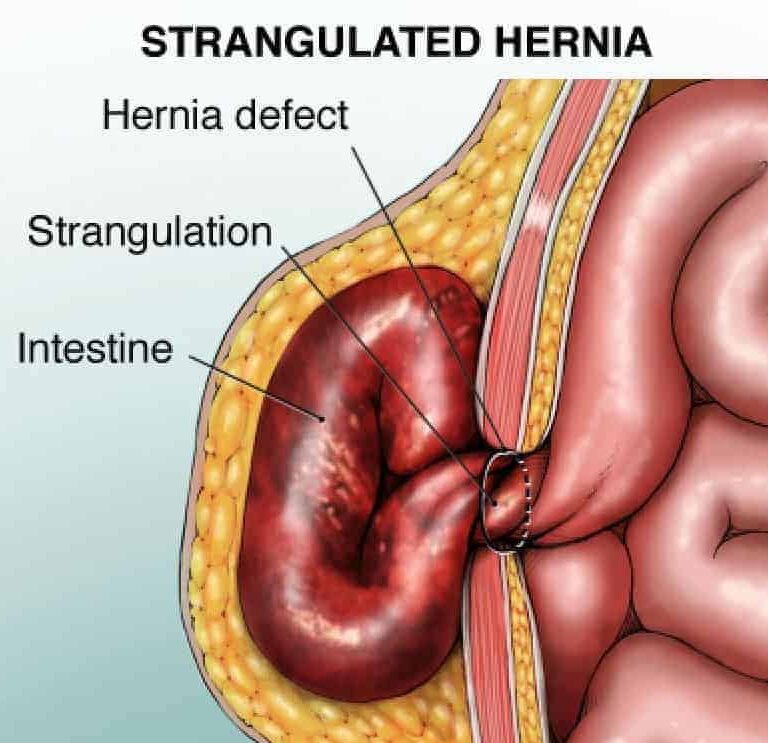
This is the complication surgeons worry about the most.
A strangulated hernia occurs when blood supply to the trapped intestine becomes compromised.
Without adequate blood flow, the affected intestine can become damaged.
Symptoms may include:
- Sudden severe pain
- A hard, tender bulge
- Redness over the swelling
- Nausea or vomiting
- Fever
- Inability to pass stool or gas
This is a medical emergency and requires immediate treatment.
Why Early Treatment Is Usually Better
There is a significant difference between treating a hernia early and waiting until complications develop.
Early Hernia
- Planned surgery
- Better preparation
- Lower stress
- Faster recovery
- Earlier return to normal activities
Complicated Hernia
- Emergency treatment
- Greater surgical complexity
- Higher risk of complications
- Longer recovery period
This is one reason many experienced surgeons recommend addressing a hernia before it starts affecting quality of life or becomes urgent.
The Role of Laparoscopic Hernia Surgery
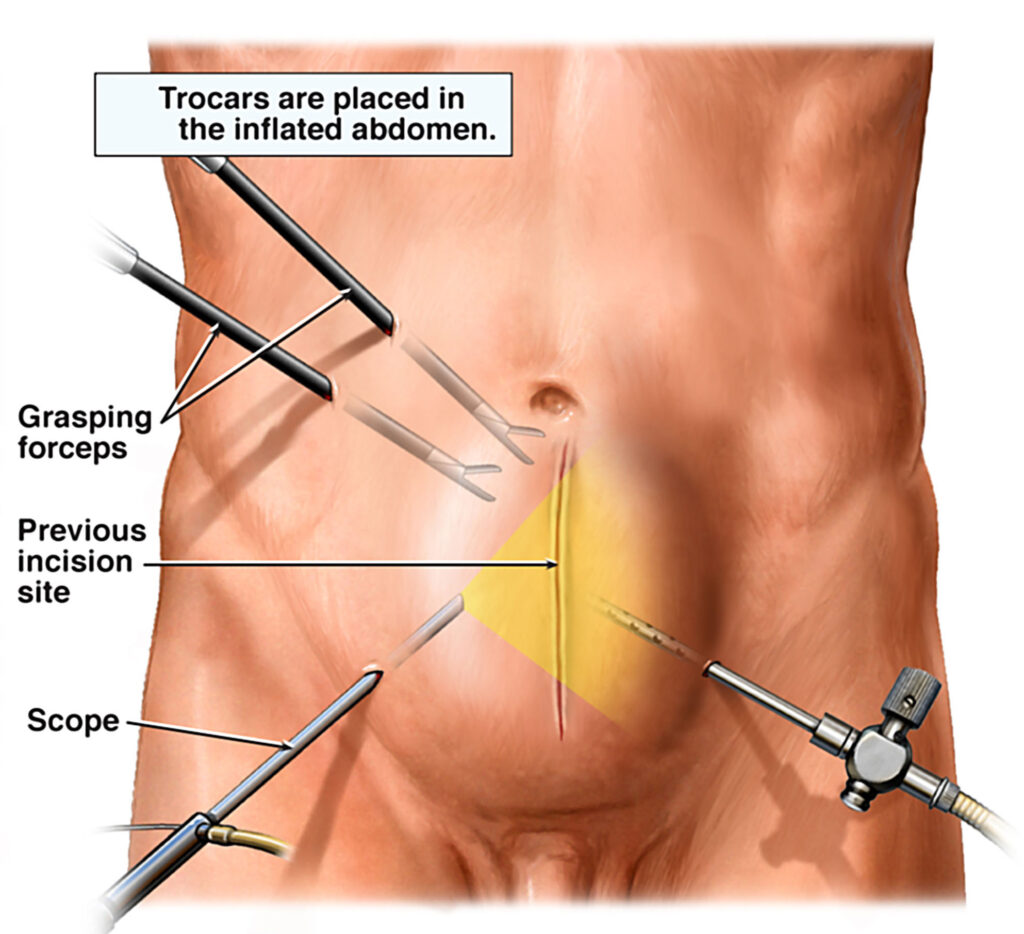
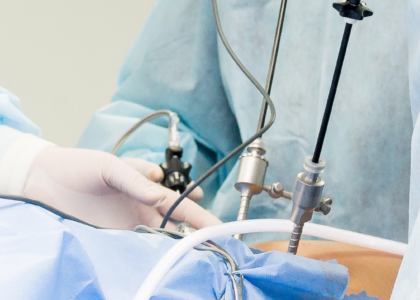
Modern laparoscopic hernia surgery has changed the way many hernias are treated.
Compared to traditional open surgery, laparoscopic techniques often offer:
- Smaller incisions
- Less post-operative discomfort
- Faster recovery
- Earlier return to work and daily activities
- Better cosmetic outcomes
- Reduced wound-related complications
Not every patient is a candidate for every laparoscopic procedure, but for many patients, early laparoscopic repair can provide an effective and comfortable solution before complications arise.
When Should You See a Doctor?
Do not wait for severe pain before seeking advice.
You should consult a surgeon if:
- The bulge is increasing in size
- You feel heaviness or discomfort
- The hernia affects daily activities
- The swelling no longer reduces when lying down
- You develop pain, nausea, vomiting, or redness
Early evaluation can help determine the best treatment plan and prevent future complications.
Hernia Treatment in Jabalpur
If you have been diagnosed with a hernia—or suspect you may have one—an expert assessment can help you understand the risks and treatment options available.
Dr. Digant Pathak is an Advanced Hernia and Gallbladder Surgeon with:
- 20+ years of surgical experience
- 16,000+ successful surgeries
- Extensive expertise in laparoscopic surgery
- Experience managing complex hernia cases, gallbladder disease, colorectal conditions, GERD, and appendicitis
Consultation available at:
Care Multi Speciality Hospital
Ukhari Chowk, MR-4 Rd, Jabalpur
A timely consultation can help you understand whether observation is appropriate or whether treatment should be considered before complications develop.
Frequently Asked Questions
Can a small hernia become dangerous?
Yes. Even small hernias can develop complications if tissue becomes trapped.
How quickly does a hernia grow?
Growth varies from person to person. Some remain stable for months, while others enlarge more rapidly.
Is every hernia an emergency?
No. Most hernias are not emergencies initially, but some can become emergencies if complications occur.
Is laparoscopic hernia surgery safe?
When performed by an experienced laparoscopic surgeon, it is considered a safe and effective treatment option for many patients.
Can I continue exercising with a hernia?
It depends on the type and severity of the hernia. Activities that increase abdominal pressure may worsen symptoms and should be discussed with a surgeon.